
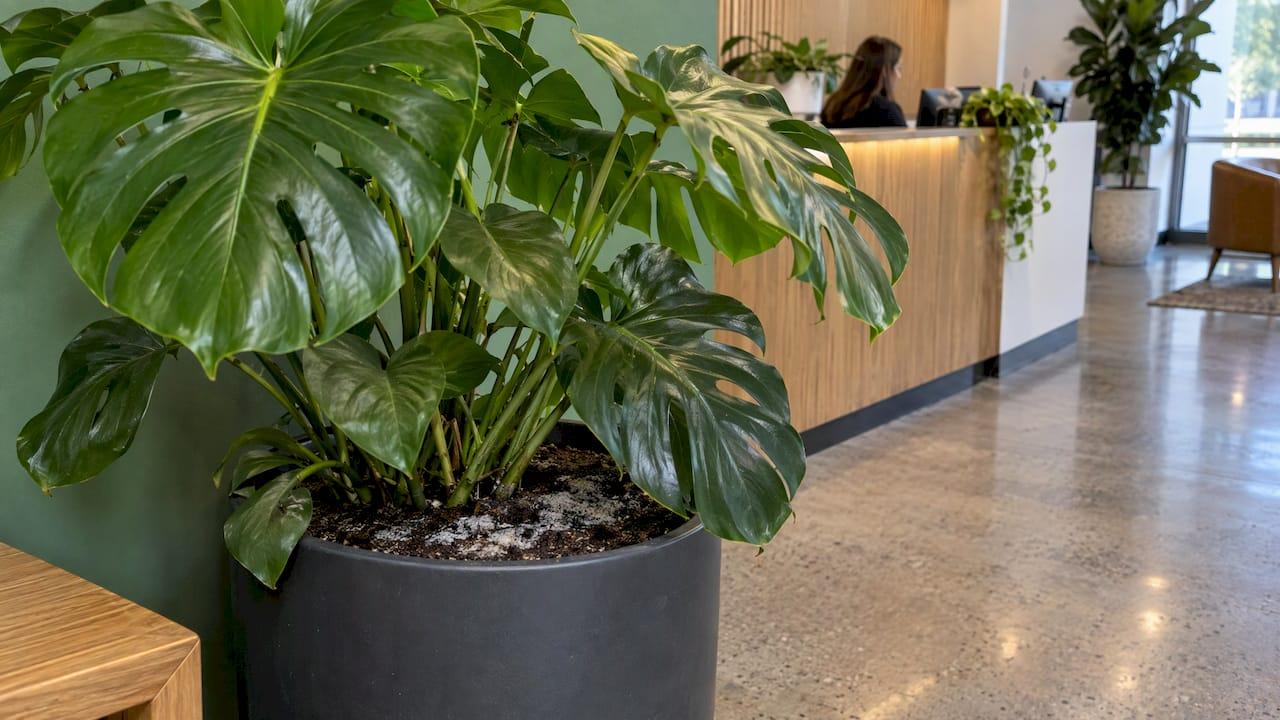
Plants do not cause mould in a well-run commercial space. Mould needs moisture, and most of that comes from the building and from how plants are watered. That is good news. It means you can have lush, beautiful greenery in your lobby, dining room or showroom, and keep it clean.
We are Greenspace Plants, Canada's leading commercial-only indoor plant service, founded in 2014. We design, install and care for plants in offices, hotels, restaurants and retail across Toronto, Vancouver and Calgary. This guide covers what mould on plants really is, when it matters, and how to keep your space looking and feeling fresh.
Key Takeaways
- Plants add very little moisture to a room. Most indoor humidity comes from people, cooking and washing, according to RHS horticulturalists.
- The white or grey fuzz on potting soil is usually a harmless decomposer. It is a sign the soil is staying wet, so the fix is watering and airflow.
- Plants do not remove mould spores from the air. Fix the moisture source instead.
- Health Canada advises keeping indoor relative humidity between 30% and 50%.
- Steady, expert watering is the best prevention. We handle it for you.
Table of Contents
- Do indoor plants cause mould?
- What is that fuzz on the soil?
- Mould on leaves and stems
- Do plants remove mould? A myth worth retiring
- When mould near plants points to a bigger issue
- What about moss walls?
- A simple routine that keeps soil and leaves clean
- Choosing plants for how your space looks and feels
- Our perspective
- Keep your greenery looking its best
- FAQ
- Sources
Do indoor plants cause mould?
Short answer: no. Plants release water vapour through their leaves. This is called transpiration. It sounds like a lot. It is not.
Dr Tijana Blanusa, Principal Horticulturalist at the Royal Horticultural Society (RHS), told BBC Gardeners' World that house plants are not the cause of mould in homes. Much of the moisture plants release is absorbed by furnishings, so plants rarely present a problem.
Guy Barter, chief horticulturalist at the RHS, makes a similar point in Gardens Illustrated. Houseplants contribute only a very small amount to condensation. Most of it comes from washing, cooking and people breathing. Insulation, heating and ventilation do far more to control humidity and mould.
For a restaurant, that is a useful lens. Your kitchen, dishwashing area and a full dining room make moisture. A few well-kept planters do not.
Where mould really comes from
Health Canada explains that mould needs three things: a food source, a suitable temperature and enough water. In its indoor air quality guidelines, it says mould growth usually results from a moisture problem, and condensation on surfaces is a major cause.
It also lists the usual culprits in its guide to addressing moisture and mould:
- Showering, cooking and laundry without good exhaust ventilation
- Leaks through cracks, or from plumbing
- Condensation on cold surfaces
- Flooding
- Overcrowding
- Inadequate ventilation
That is a building list. Plants are not on it.
What is that fuzz on the soil?
You may have seen a white or greyish film on the soil of a planter. It looks alarming. Usually, it is not.
University of Maryland Extension says fungi on indoor plant soil form a white-to-grayish layer when conditions are moist. This growth is usually not harmful to the plant.
The German substrate association GGS goes further. Its explanation of mould in potting soils says these are saprophytic fungi. They feed on dead organic material and do not attack living plant parts.
Epic Gardening adds that this kind of white mould can even point to active, healthy soil, since these organisms break down decaying matter into nutrients.
Why it still deserves a look
The fuzz is a signal. It tells you the soil has stayed damp for a while. The Spruce lists the common causes: overwatering, poor drainage, contaminated soil, high humidity and rotting plant matter. It also notes that heavy growth can compete with the plant for nutrients.
University of Maryland Extension adds that a thick mat can slow water absorption. It can also attract pests whose larvae feed on roots.
So the soil fuzz itself is mostly a cosmetic issue. But for a space where looks matter, that counts. A guest in a hotel lobby should see crisp greenery and clean, tidy soil.
Safe handling
GGS notes that when spores build up in room air, sensitive people may react. This applies especially to people with chronic or allergic respiratory conditions. If someone on your team has asthma or allergies and notices symptoms around a planter, remove the mat and let the soil dry. If symptoms continue, they should speak with their doctor.
Mould on leaves and stems
Leaf mould is a different story from soil fuzz. Grey mould, also called Botrytis blight, can affect the plant itself.
University of Maryland Extension describes it as starting with grey to tan patches on older leaves or spent flowers, with dusty grey spores. It thrives when leaves are wet, humidity is high, temperatures are cool and days are overcast.
The same page lists what helps:
- Lower the humidity
- Keep leaves from staying wet
- Increase air circulation
- Water early in the day
- Remove the affected plant parts
Notice the pattern. Every item is about the conditions around the plant. That is why consistent care matters more than any single product.
Do plants remove mould? A myth worth retiring
You may have read that one plant removes 78% of mould. It is a popular claim online. The experts do not back it.
Sarah Gerrard-Jones, known as The Plant Rescuer, told Gardens Illustrated she can categorically state that houseplants do not remove mould or condensation from a room. Plants transpire. They do not pull spores out of the air. BBC Gardeners' World reports there is also no evidence that house plants can reduce mould.
We say this plainly because we want you to choose plants for the right reasons. Plants make a space feel warmer, more welcoming and more on-brand. They soften hard lines and add colour. That is their job, and they do it well.
If you are chasing a musty smell, treat the source. True odour elimination rather than air fresheners deals with the cause instead of masking it. Plants are for beauty and atmosphere, not for cleaning the air of mould.
If you are curious about how plants and room humidity interact, see our post on which indoor plants actually improve humidity levels.

When mould near plants points to a bigger issue
Sometimes mould appears near a planter because the room has a moisture problem. The plant did not cause it. It simply sits where the damp is.
Signs to watch for: musty smells, condensation on windows, damp patches on walls or ceilings, or mould on surfaces away from any plants.
Health Canada's guidance for indoor air quality professionals gives a clear path:
- Find and fix the moisture source.
- Keep relative humidity between 30% and 50%. That is about 50% in summer and 30% in colder weather.
- Use exhaust fans vented outdoors.
- Clean small areas, under 1 m², wearing N-95 protection and using an unscented soap solution.
- Call a professional if a single patch is over 3 m², or if mould returns after remediation.
Painting over mould will not solve it. For a large patch or repeat growth, bring in a qualified mould remediation professional. That is a building job, and it needs a specialist.
Why it matters for people
Health Canada says damp, mouldy indoor spaces are linked to eye, nose and throat irritation, coughing, wheezing, shortness of breath and worsening asthma. Children, older adults, pregnant women, and people with allergies, respiratory illness or weakened immune systems are the most likely to be affected, according to the City of Toronto's mould guidance.
For a workplace, hotel or restaurant, that is reason enough to watch humidity closely. A simple hygrometer, a small device that reads relative humidity, tells you where you stand.
What about moss walls?
Moss walls are a favourite for lobbies, dining rooms and feature walls. They add texture and calm. People often ask whether they grow mould.
A moss wall lives in the same air as everything else in the room. So the same rule applies. Keep the room's relative humidity within Health Canada's 30% to 50% range, keep air moving, and fix any leak or condensation problem at the source.

We design and install moss plant walls and green walls for commercial spaces. If you are planning one, tell us about the room: its ventilation, its light, and how guests use it. That shapes the design from the start. You can see the range on our green walls page.
A simple routine that keeps soil and leaves clean
This is what good care looks like. It follows the University of Maryland Extension advice above.
- Let the soil surface dry between waterings. Constantly wet soil is the main trigger. Check before you water, not on a fixed schedule.
- Give plants room. Space pots so air can move between them. Dense, crowded groupings hold humidity.
- Water early in the day. Leaves and soil then dry out before evening.
- Remove any fungal mat. Break it up or scoop it off the top of the soil.
- Take off spent leaves and flowers. Old, dying plant matter feeds mould.
- Watch the room. If humidity creeps past 50%, look at ventilation before you look at the plants.
Our short post on a 30 second check for office plant watering problems shows how to spot over- and under-watering fast.
The part you can hand off
This routine is simple on paper. In a busy office or a full restaurant, it is the first thing to slip. Nobody has time to check twenty planters before opening.
That is where our service helps. With Greenspace+, we handle plant design, installation, regular maintenance and plant replacements for a fixed monthly fee. There are no upfront costs and no long-term commitments. Our plants come with a healthy plant guarantee. You can read what happens on a visit in what to expect during a maintenance visit.
Choosing plants for how your space looks and feels
Great commercial plantscaping starts with the room. Light, layout, ceiling height and brand all matter. A boutique hotel wants something different from a tech office or a casual restaurant.
Planters matter too. We source standard, premium, luxury and custom planters, so the container fits your look as much as the plant does.
If you are an interior designer, we collaborate on installations and can work to your concept. Our office plant design portfolio shows what we have done. For help with picking varieties, see our indoor plant choices for offices and businesses.
Our perspective
We have been doing this since 2014, and the mould question comes up often. Our answer is calm: healthy plants and a healthy room go together.
The plants themselves are not the issue. Mould follows moisture, and moisture comes from the building and from how a plant is watered. That is why we focus on steady, thoughtful care. A plant that is watered when it needs it, given space and kept in good light looks better and stays cleaner.
We are Canada's leading commercial-only indoor plant service. We care for more than 60,000 plants across 400+ commercial locations. We are WBE Canada certified, which means we are woman-owned. And we run national programs for multi-location brands, including in the US.
What we hear from office managers, hospitality teams and property managers is the same thing: they want the look without the chore. So we take the chore. Design, installation, maintenance and replacements are all in one monthly service. You enjoy the space. We look after the plants.
Nicole
Keep your greenery looking its best
If you want a space that looks vibrant and needs no plant upkeep from you, Greenspace+ is built for that. It starts from $299 per month and covers design, installation, regular maintenance and plant replacements, with no upfront costs and no long-term commitments.

Multi-location brand? Our National Account Plant Program gives every site a consistent look. Ready to talk about your space? Start with Greenspace+.
FAQ
Do indoor plants cause mould?
No. RHS horticulturalists say plants add only a very small amount of moisture to a room. Most indoor humidity comes from people, cooking and washing. Mould appears where moisture lingers, which is usually a ventilation or leak issue.
Is white mould on plant soil dangerous?
It is usually a harmless decomposer fungus and does not harm the plant. It does show the soil is staying damp. Break up the mat, let the surface dry and improve airflow. If someone in your space has asthma or allergies and reacts, they should see their doctor.
Can a moss wall grow mould?
Moss walls sit in your room's air, so the room's humidity matters most. Health Canada advises keeping relative humidity between 30% and 50%. Good ventilation and no leaks or condensation behind the wall keep it looking its best.
Do plants remove mould from the air?
No. Experts told Gardens Illustrated that plants release water vapour and do not pull mould spores out of a room. Choose plants for how they make a space look and feel. If you suspect mould, fix the moisture source.
When should I call a professional about mould?
Health Canada advises seeking professional help if a single patch is larger than 3 m², or if mould returns after it has been cleaned. It also says painting over mould does not fix the problem.
Sources
- Are house plants making your home mouldy? BBC Gardeners' World
- Can house plants really beat mould? Gardens Illustrated
- Residential Indoor Air Quality Guidelines, Health Canada
- Guide to addressing moisture and mould indoors, Health Canada
- Algae and Fungal Growth on the Soil of Indoor Plants, University of Maryland Extension
- Mould in potting soils, GGS
- White Mold on Houseplant Soil, Epic Gardening
- What To Do About Mold on Houseplant Soil, The Spruce
- Gray Mold or Botrytis Blight on Indoor Plants, University of Maryland Extension
- Guidance for indoor air quality professionals, Health Canada
- Mould, City of Toronto
- True odour elimination vs. air fresheners, GreenStory