
The best approach is straightforward: choose foliage-first plants that rarely flower indoors and skip anything fragrant, sap-heavy, or spore-releasing, then back that choice with a real maintenance routine. A strong shortlist includes the snake plant, lady palm, spider plant, cast-iron plant, and peperomia. Pick one or two from that list and commit to weekly leaf dusting, or hand the whole job to a service like Greenspace+.
TL;DR:
- Choosing foliage-first plants like snake plants, lady palms, and cast-iron plants minimizes allergy risks if kept dusted and maintained regularly.
- Low-allergen plants should rarely flower, not release spores, and have minimal sap, with palms and philodendrons being particularly safer options.
- Regular cleaning, bloom watch, and safe soil practices are essential to prevent mold, spores, and dust buildup that cause allergic reactions indoors.
- Avoid heavily scented flowering plants, ferns, and Ficus species near desks, and set rules for pruning to reduce spore and sap release risks.
- Outsourcing maintenance to a specialized service ensures consistent upkeep, reducing allergen accumulation and supporting a healthier office environment.
Table of Contents
- What Makes an Office Plant Allergy Friendly?
- Which Low-Allergy Office Plants Should You Choose?
- Which Plants Should You Avoid in a Shared Office?
- How Do You Maintain Plants to Reduce Allergens?
- How Do You Choose Plants and a Vendor for Your Office?
- How Do You Track and Respond to Employee Plant Allergies?
- What Soil and Fertilizer Choices Lower Allergen Risk?
- The Greenspace Plants Perspective on Allergy Risk
- Get a Low-Allergen Plantscape Without Managing It Yourself
- Sources
What Makes an Office Plant Allergy Friendly?
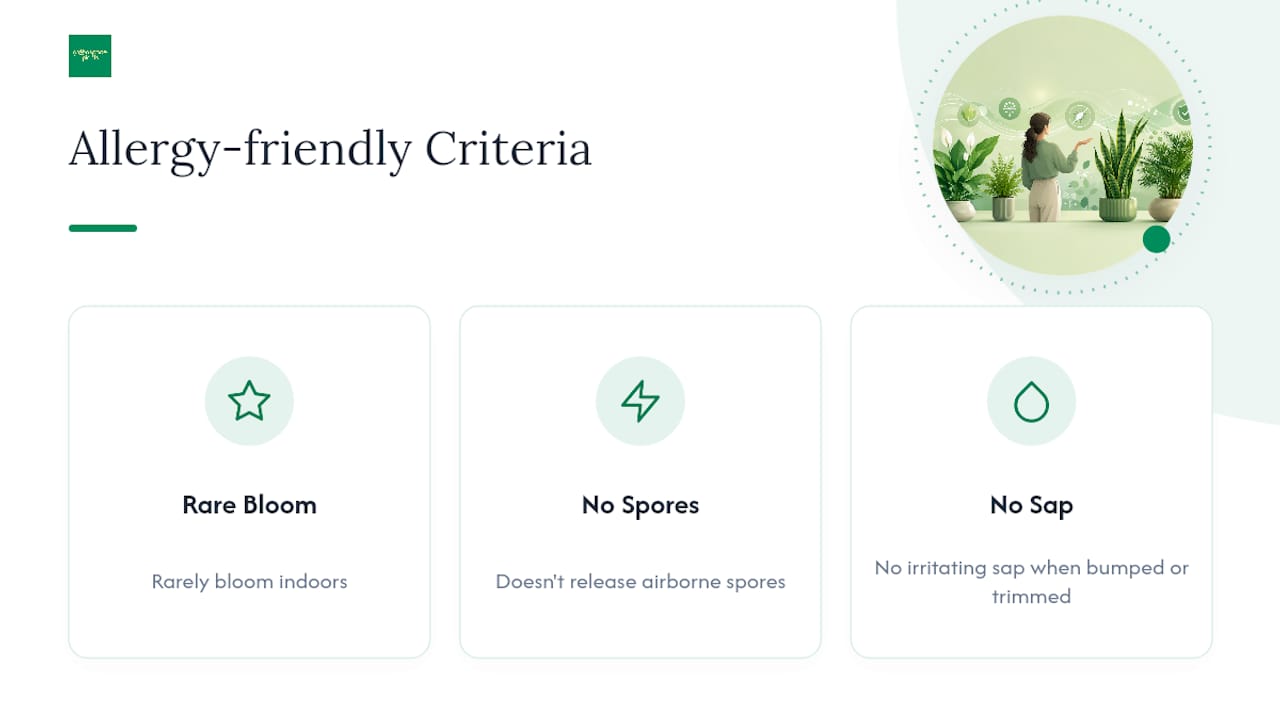
Allergy friendly office plants share three traits: they rarely bloom indoors, they don't release airborne spores, and they don't ooze irritating sap when a leaf gets bumped or trimmed. That's the practical definition facilities teams should use instead of vague "air purifying" marketing claims.
Allergy organizations point to palms, pothos, and philodendrons as consistently lower risk, while ferns, certain flowering plants, and ficus species show up repeatedly in reports of indoor allergic reactions, according to the Asthma and Allergy Foundation of America. The distinction matters because most office allergy complaints don't come from the plant itself. They come from dust sitting on leaves, mold in overwatered soil, or a fern quietly releasing spores near an HVAC intake.
This is also why "hypoallergenic office plants" isn't really a fixed category of species. It's a combination of the right plant plus the right upkeep. A snake plant that never gets dusted collects the same allergen load as any other neglected surface in the building.
Which Low-Allergy Office Plants Should You Choose?
Here's a working shortlist of low-allergen indoor plants that hold up well in commercial spaces, based on foliage-first growth habits and low indoor flowering rates.
- Cast-iron plant. Nearly indestructible and almost never flowers indoors, which makes it a safe default for low-light corners or reception areas. Wipe leaves monthly with a damp cloth since its broad surface collects dust fast.
- Lady palm (Rhapis excelsa). A dense, fan-leafed palm that tolerates office lighting and rarely produces pollen indoors. Works well as a floor screen between desks; rinse foliage under low water pressure every few weeks to knock off buildup.
- Kentia palm. Taller and more architectural than the lady palm, ideal for lobbies or open floor plans. Keep soil on the drier side between waterings to avoid the fungus gnats that thrive in soggy potting mix.
- Parlour palm. Compact enough for a desktop or small credenza, with the same low-pollen profile as its larger palm relatives. Rotate it occasionally toward light to keep growth even and reduce leaf drop.
- Snake plant. One of the most tolerant species for low-maintenance offices, and it almost never flowers indoors. Water only when the soil is fully dry. Overwatering is the main allergen risk here, since it invites mold.
- Spider plant. A reliable desk or shelf plant that produces small flowers infrequently and rarely indoors under office lighting. Trim brown tips promptly so dead material doesn't become a mold source.
- Peperomia. Small, tidy, and well suited to individual desks where space is tight. Its thick leaves shed dust easily with a quick wipe, and it needs minimal watering.
- Calathea (rattlesnake plant). Foliage-focused with striking leaf patterns, good for adding visual interest without flowering risk. Keep it away from direct HVAC vents, since dry air causes crisping that sheds particles.
- Chinese evergreen (Aglaonema). Extremely tolerant of low light and inconsistent watering, making it forgiving for shared spaces without a dedicated plant caretaker. Dust leaves biweekly given their glossy, dust-attracting surface.
- Dracaena varieties. Reliable structural plants for larger planters or corners, with foliage habits that keep indoor flowering rare, according to North Carolina Extension's Dracaena fragrans page. Best in a tall planter where staff won't brush against it constantly.
A master-gardener list from Dakota County backs up several of these picks as low-risk choices for sensitive indoor spaces, and all ten are widely available through Canadian plant suppliers and greenhouses.
Which Plants Should You Avoid in a Shared Office?
Three plant groups cause most of the trouble. Ficus species, including the weeping fig, release a latex sap when leaves break or get pruned, and that sap is a known trigger for people with latex sensitivities. Heavily scented flowering plants like lilies, hyacinths, and chrysanthemums pump fragrance and pollen into shared air, which is a problem in an open-plan office where nobody can just shut a door. Ferns release spores rather than pollen, and those spores travel further through HVAC systems than most people expect.
If removing a problem plant outright isn't practical, a few adjustments cut the risk meaningfully:
- Keep flowering or fern species at least several feet from desks and airflow vents.
- Set a "no pruning during business hours" rule so sap and spore release doesn't happen near staff.
- Require gloves for anyone handling Ficus species, with sap wiped immediately if a leaf breaks.
- Check new plant deliveries against a known-allergy list before placement.
Pro Tip: Ask your plant supplier for a plant's OPALS rating (the Ogren Plant Allergy Scale) before you buy. It's a simple 1 to 10 score that ranks allergy potential, and sourcing anything rated low on that scale takes the guesswork out of office plant selection.
How Do You Maintain Plants to Reduce Allergens?
Dust is one of the most common indoor allergy triggers, and the University of Connecticut's home garden program notes that clean leaves and healthy soil are what determine whether a houseplant helps or hurts indoor air quality. A neglected plant collects dust the same way a bookshelf does, then redistributes it every time someone walks past or a vent kicks on.
A simple maintenance calendar handles most of the risk:
- Weekly: Damp-wipe leaves to remove settled dust before it becomes airborne again.
- Monthly: Inspect for flower spikes or buds and remove them before they open, especially on species that occasionally bloom indoors.
- Quarterly: Deep clean planters, check soil for mold or sour smell, and repot anything showing white mold crust on the surface.
Potting choices matter just as much as the cleaning schedule. Peat-free potting mixes reduce mold-friendly organic buildup, and closed-liner planters stop excess water from pooling where it can breed mold spores. Watering after hours, rather than mid-day, avoids both wet floors and the humidity spikes that happen when soil sits saturated during business hours.
This is where the idea of a "bloom watch" comes in. It's a standing habit of checking plants for unexpected flower spikes before they open and release pollen indoors, since even normally low-bloom species can surprise you under certain light and temperature conditions. Facilities teams running dozens of plants across multiple floors rarely catch every bloom in time, which is the practical case for outsourcing this to a maintenance provider who tracks it on a schedule rather than an as-needed basis.

How Do You Choose Plants and a Vendor for Your Office?
Start with a short internal checklist before adding a single plant to your floor plan:
- Confirm whether any staff have disclosed plant, pollen, or latex allergies.
- Default to foliage-first species with low OPALS scores over anything known to flower or produce sap.
- Match planter type to placement, using closed-liner containers near desks and walkways.
- Ask any maintenance provider what their bloom-watch and rapid-swap policy looks like.
If you're evaluating a plantscaping vendor, ask directly about maintenance frequency, pest control protocols, soil type, and what happens if a plant develops mold or drops leaves unexpectedly. Also ask how staff safety is handled: gloves for sap-producing species, immediate cleanup procedures, and clear labeling for anything with known allergy risk.
As a rule of thumb, a handful of desk plants in a small office is manageable in-house. Once you're covering multiple floors or a full commercial space, consistent execution becomes the hard part, and that's usually when a dedicated service makes more sense than relying on whoever remembers to water on Fridays.
How Do You Track and Respond to Employee Plant Allergies?
Most offices never ask staff about plant sensitivities until someone is already sneezing at their desk. A short intake question during onboarding, or a simple annual survey, catches this earlier and gives facilities teams a real list to work from instead of guessing.
Keep the process light. A one-line question like "do you have known sensitivities to pollen, latex, or mold" during new-hire paperwork is enough to flag most cases. Pair it with an easy way to report a reaction after the fact, whether that's a shared inbox, a note to HR, or a quick form. The goal isn't a formal medical record. It's just enough information to avoid placing a Ficus next to someone with a documented latex allergy.
When a complaint comes in, treat it as data, not a one-off nuisance. Note which plant, how close it was to the person's workspace, and what symptoms showed up. If two or three people report similar issues near the same plant, that's a strong signal to relocate or swap it rather than debate whether it's really the cause.
Facilities leads managing multiple floors benefit from folding this into whatever maintenance tracking they already use. Reviewing feedback alongside the role plants play in a building's air quality strategy helps separate a genuine plant-related issue from a broader ventilation problem that just happens to show up near the greenery.
What Soil and Fertilizer Choices Lower Allergen Risk?
Soil is an underrated allergen source. Overly wet, peat-heavy mixes hold moisture near the surface, which is exactly the environment mold favors, and mold spores are a far more common irritant than most people realize once they start looking at office complaints closely.
A peat-free, well-draining potting mix is the simplest fix. It dries more evenly, which cuts down on the surface mold that shows up as a white or gray crust after a few weeks of overwatering. Pairing that with a closed-liner planter keeps excess water contained instead of pooling against the pot's base, where it quietly breeds mold without anyone noticing until the smell gives it away.
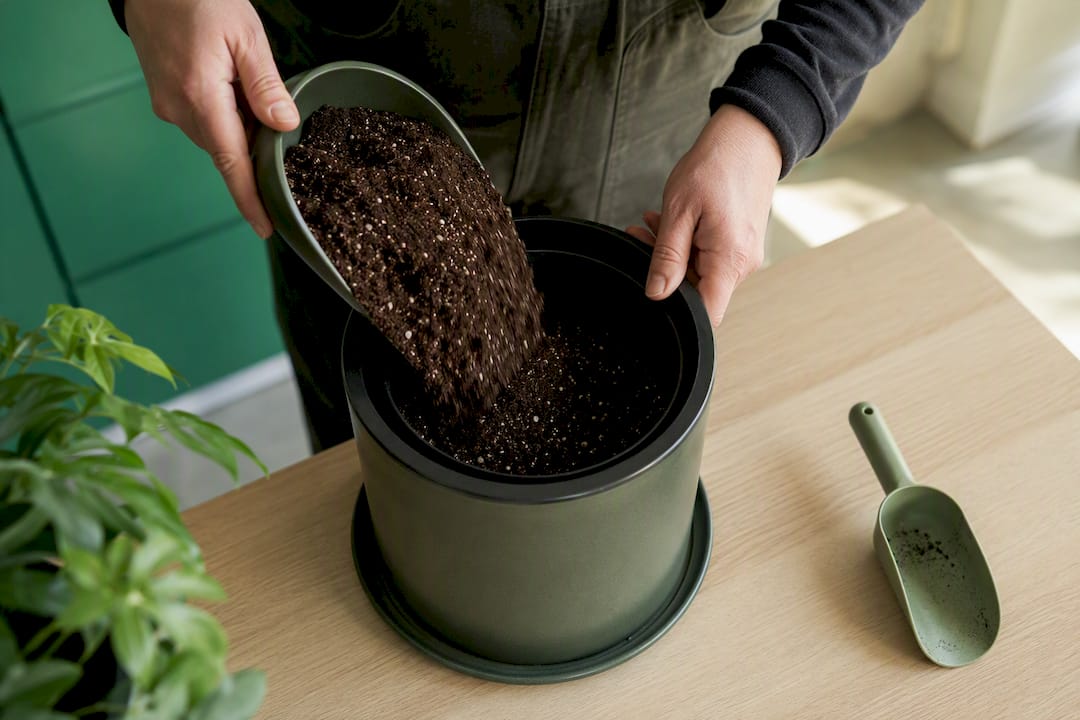
Fertilizer choice matters less than application method. Slow-release granular fertilizers worked into the soil surface create less airborne dust than powdered formulas, which can aerosolize slightly when applied and settle on nearby desks. Liquid fertilizers mixed into water avoid that issue entirely and tend to be the lower-risk option for shared office environments.
Whatever organic material gets pulled during repotting, such as old soil or trimmed roots, shouldn't sit in an open bin near workstations. A workplace composting guide is worth a look if your office wants a proper disposal system rather than letting plant waste sit and mold in a corner bin.
The Greenspace Plants Perspective on Allergy Risk
Most allergy-friendly plant advice stops at "pick the right species," but species selection solves maybe half the problem. The other half is consistency, and consistency is where in-house plant care usually breaks down across a busy commercial floor.
Greenspace+ handles the maintenance side that most offices quietly neglect: scheduled leaf cleaning, bloom watch on every visit, closed-liner planters, and watering timed to avoid the humidity spikes that invite mold. Nicole, who leads content and client education at Greenspace Plants, has spent years watching offices in Toronto, Vancouver, and Calgary struggle with the same pattern: the right plants, chosen with good intentions, undermined by inconsistent upkeep. A typical maintenance visit checklist covers dust removal, soil moisture checks, flower-spike removal, and a quick scan for pests or mold before they become a bigger issue.
— Nicole
Get a Low-Allergen Plantscape Without Managing It Yourself
Greenspace Plants is the alternative to piecing together your own plant list and hoping someone remembers to dust the leaves. For a fixed monthly fee, Greenspace+ covers design, installation, and the recurring maintenance this article just walked through, including bloom watch, leaf cleaning, and swap policies for anything that isn't thriving, with no upfront cost or long-term commitment required.
That matters most for offices juggling multiple floors or shared spaces where allergy sensitivities vary from person to person. Instead of building an in-house checklist and hoping it gets followed every week, Greenspace Plants applies it consistently across every visit. The team works across interior plant services for offices in Toronto, Vancouver, and Calgary, and can also handle green plant walls or desk-area plant integration for tighter spaces. If your office is ready to swap the guesswork for a maintained, allergy-conscious plant program, request a quote and get a plan built around your floor plan and staff needs.
Sources
- Houseplants for healthier indoor air | University of Connecticut Home Garden Education
- Are there indoor plants that won't trigger asthma or allergy symptoms? | Asthma and Allergy Foundation of America