
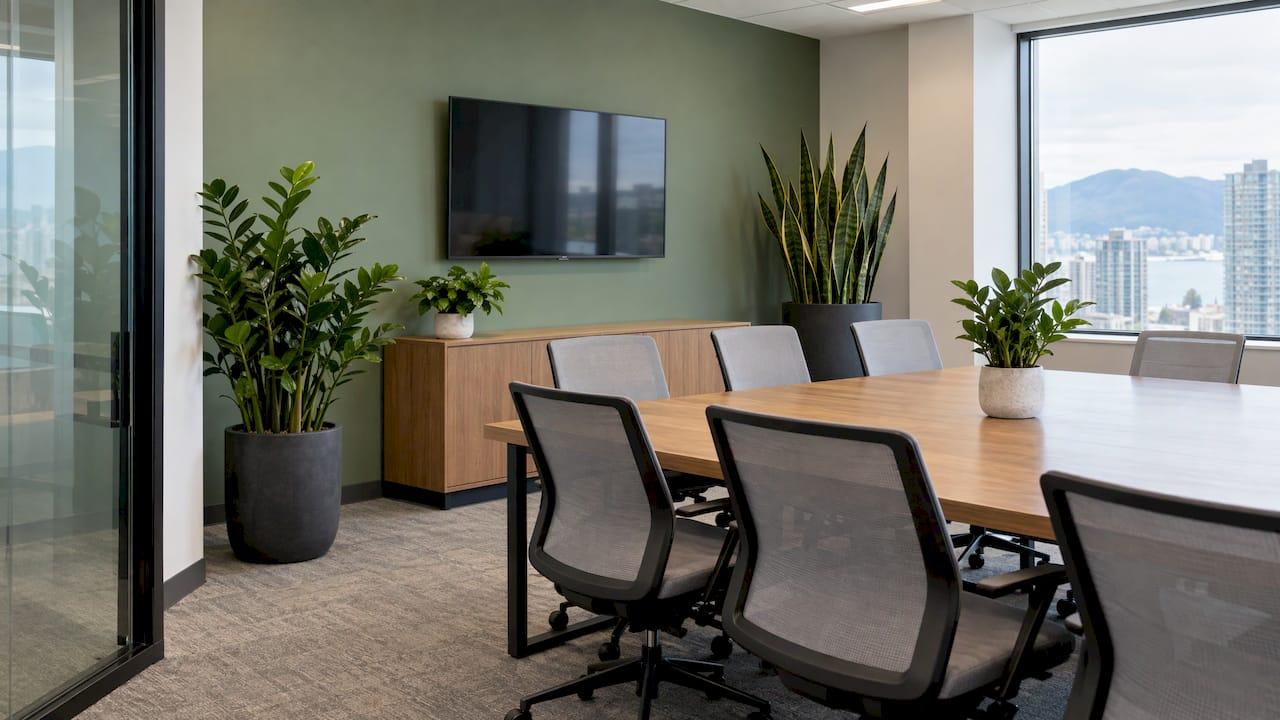
The best low humidity office plants are the ones built for dry air: snake plant, ZZ plant, Chinese evergreen, pothos and beaucarnea. Pick those, give them the right spot, and keep the watering steady. Your space stays green through a Canadian winter.
The hard part is rarely the choice. It is the follow-through. Someone has to check soil, rotate pots, and replace what struggles. At Greenspace Plants, we are Canada's leading commercial-only indoor plant service, founded in 2014. We design, install and care for plants in offices, hotels, restaurants and retail across Toronto, Vancouver and Calgary. This guide shows you what works and why.
Key Takeaways
- Heated Canadian offices are dry in winter. Choose plants that tolerate dry air, such as snake plant, ZZ plant, Chinese evergreen, pothos and beaucarnea.
- Overwatering does more harm than dry air. Most of these plants want the soil to dry out between waterings.
- Light decides the look. Low-light lobbies and restaurants suit different plants than a bright window wall does.
- Check toxicity before you place plants where visitors, kids or pets can reach them.
- A fixed-fee service takes watering, rotation and replacements off your list. Greenspace+ starts from $299 per month.
Table of Contents
- Why Canadian offices run dry
- The plants that handle dry air best
- Low light is a different question from low humidity
- Bright offices: plants that like the sun
- How to water in dry air
- Plants that handle irregular care
- Safety: pets, visitors and placement
- What a plant program takes off your plate
- Our view
- Plants that look right and stay right
- FAQ
- Sources
Why Canadian offices run dry
Forced-air heating pulls moisture out of the air. Add air conditioning in summer, and your plants rarely get the damp air many of them evolved in.
One Canberra office study measured median relative humidity at 29.1% in offices without plants. That is on the dry side for most tropical species. The same study found humidity rose to 38.9% with five Boston ferns and 49.2% with 18. Plants add moisture to the room, but they also need to survive it first.

The University of Manitoba's office plant guide names humidity, temperature, water and sunlight as the four main factors that affect office plants. Dry air is one of four. You can manage it by choosing well.
The plants that handle dry air best
Start with these. They tolerate dry air, uneven watering and the odd drafty corner.
| Plant | Dry-air tolerance and care | Best for |
|---|---|---|
| Snake plant | Withstands drought, poor light, drafts and low humidity. Overwatering is its greatest enemy. | Windowless rooms, tall accents |
| Chinese evergreen (aglaonema) | Tolerates poor light, dry air, air conditioning and drought. Grows in moderate daylight at 20 to 25°C. | Reception desks, shared floors |
| ZZ plant | Needs water only once or twice a month, and only once the mix is completely dry. Keep it above 60°F (about 16°C). | Meeting rooms, low light |
| Pothos | Water when soil is dry. Moderate light is ideal. | Shelves, trailing displays |
| Beaucarnea (elephant's foot) | Tolerates dry air well. Let the soil dry completely. | Sculptural statement pieces |
| Parlor palm | Suits low light. Keep the soil moist and check often in dry climates. | Soft, airy corners |
The Alberta list is a government document, and it is clear on the first two. Snake plant and aglaonema are the dependable picks when the air is dry and nobody is watching the pots.
Some plants are fussier. The University of Manitoba suggests peace lilies for shade and fluorescent light, but keeps them away from air conditioning units. Peace lilies like moister air, so give them a protected spot.
For more on how plants and humidity interact, see our piece on which indoor plants actually improve humidity levels.
Low light is a different question from low humidity
Many people search for both at once, because the dark corners are often the dry ones too. Treat light and humidity as two separate checks.
The RHS lists aglaonema, snake plant and ZZ plant as its low-light office choices. Those same three show up on the dry-air list above. That overlap is your shortcut for lobbies, interior meeting rooms and hallways.
A simple test: can you read comfortably at midday without a lamp? If not, the space is low light. Stick to the plants above and skip anything that wants a sunny window.
If your space has no daylight at all, we cover options in our guide to office plants with no sunlight.
Low-light lobbies
A lobby is the first thing visitors see. It needs height, shape and a calm, well-kept look.
- Use tall snake plants or beaucarnea for vertical presence.
- Group two or three pots at different heights, rather than scattering singles.
- Choose planters that match your finishes. A good planter carries as much of the look as the plant does.
Groups of plants also help each other in dry air, because the moisture they release stays close by.
Low-light restaurants
Dining rooms are dim by design, and plants have to live with that. They also face heat from kitchens and doors opening in winter.
- Keep plants out of walkways and away from the pass and heaters.
- Avoid cold drafts near entrances.
- Use trailing pothos on high shelves and banquette tops. It reads soft and layered in warm lighting.
- Pick sturdy plants. Staff are busy, and nobody has time to rescue a struggling fern.
A lush look sets the mood for dinner. A tired plant does the opposite. That is why we care for plants in restaurants as part of the service, not just place them.
Bright offices: plants that like the sun
If you have a sunny window wall, you can go beyond the low-light group. Succulents shine here.
Jade plant wants full sun. It waters when about three-quarters of the soil is dry, and it can reach 3 to 6 feet at maturity. It also has thick, glossy leaves that look sharp in a modern planter. Aloe vera suits a sunny sill too. Both are toxic to animals, so mind the placement.
Rubber plants suit bright indirect light near windows, per the University of Manitoba guide, with watering about every 7 to 10 days.

For design ideas that go beyond survival, read our notes on the best indoor plants for office aesthetics.
How to water in dry air
This is where most office plants fail. Dry air tempts people to water more. Don't.
The Alberta list says overwatering is the greatest enemy of snake plant. The same logic applies to ZZ plant, beaucarnea and most of the picks above. The Fafard guide says peperomia fears excess water above all.
A simple routine:
- Check the soil first. Push a finger in. If it is damp, wait.
- Water thoroughly, then drain. Never leave a pot standing in water.
- Water less in winter growth slowdowns, but keep checking. Dry heated air can dry soil faster than you expect, so look rather than assume.
- Rotate monthly. The RHS advises a monthly quarter-turn so plants in low light grow evenly.
- Move plants away from vents and doors. The University of Manitoba warns against drafts, cold air and AC units.
We wrote up a quick method in our 30-second check for office plant watering problems.
When nobody owns the plants
This is the real office problem. One person waters on Monday. Another waters on Wednesday. The plant drowns.
The RHS describes it as too many cooks, and suggests self-watering containers when no single person is responsible. Even so, a clear owner beats any workaround. With Greenspace+, our technicians handle the care on a set schedule, so there is one routine and no guesswork.
Misting, pebble trays and humidifiers
The University of Manitoba suggests misting tropical plants in dry offices, especially in winter. It is a light, short-term top-up. For a lasting lift, grouping plants and keeping them clear of heat sources does more, and a small room humidifier helps most in the driest months.
None of this replaces choosing the right plant. A snake plant doesn't need any of it.
Plants that handle irregular care
Offices go quiet over holidays and long weekends. Plants have to cope.
Scotts Fafard's Geneviève Roy says office plants should tolerate long stretches without water, avoid demanding lighting, and not grow too fast, since repotting in an office is awkward. Hoya, she notes, can sulk for a long time if it is repotted, pruned or moved.
That favours slow, steady plants. For more ideas, see this list of plants that handle irregular watering. And for meeting spaces, our guide to conference room plants shows low-effort choices that still look intentional.
Safety: pets, visitors and placement
Check this before you buy. It matters most in restaurants, hotels and reception areas, where the public walks past.
The University of Saskatchewan lists pothos, philodendron, dieffenbachia, lilies and ivy among plants to watch for. It advises using only non-toxic plants if there is a curious child, cat or dog. For a suspected poisoning in Saskatchewan, it gives the Saskatchewan Poison Control Centre number: 1-866-454-1212. If you are elsewhere, call your local poison centre, or your vet if an animal is involved.
The Manitoba Master Gardener Association adds practical workplace rules:
- Place plants where people won't trip over them.
- Never block emergency exits.
- Keep plants away from electrical outlets and equipment when watering.
- Choose non-flowering plants to limit allergens.
- Avoid toxic plants where young or curious visitors can touch them.
If your space has pets or children, mention it early in the design stage. Plant design is part of what we do for you.
What a plant program takes off your plate
Buying plants is one afternoon. Keeping them looking good is every week.
With Greenspace+, you pay a fixed monthly fee. It covers plant design, installation, regular maintenance and plant replacements. There are no upfront costs and no long-term commitments. Our plants come with a healthy plant guarantee, so a plant that struggles in dry winter air is our problem, not yours.
That suits the people we work with: office managers who care how the space looks, workplace experience leads, interior designers, and property and hospitality teams. You get the look without the upkeep.
If you want to see what a visit involves, read what to expect during a maintenance visit.
Our view
Dry air is not a reason to skip plants. It is a reason to choose them well.
When we walk into a new space, we look at light first, then at where the heat and the doors are. Most dry-air trouble comes from the wrong plant in the wrong spot, or from a well-meaning person with a watering can. A good plantscape should look calm and finished on a Tuesday in February, not just on install day.
That is why we design with hardy, handsome plants and care for them ourselves. We have been doing it since 2014, across more than 400 commercial locations and over 60,000 plants. We are also WBE Canada certified, which means we are woman-owned. It matters to us that your space reflects your brand and that you never have to think about the watering schedule.
Nicole
Plants that look right and stay right
If you want greenery that suits your brand and survives dry air, Greenspace+ is built for it. It starts from $299 per month and includes design, installation, maintenance and replacements. You can explore Greenspace+ to see how it works.

We serve Toronto, Vancouver and Calgary. We also run national programs for multi-location brands, including in the US. If that is you, see our National Account Plant Program. Prefer to start with plant selection? Our indoor plant choices page is a good first stop.
FAQ
What are the best low humidity office plants?
Snake plant, ZZ plant, Chinese evergreen, pothos and beaucarnea are the most reliable. Official Canadian guidance lists snake plant and aglaonema as tolerant of dry air. Water only when the soil has dried.
Can I keep plants in a windowless room?
Yes, with the right choice. Snake plant, ZZ plant and Chinese evergreen all cope with poor light. The University of Manitoba recommends snake plants for dark, windowless offices. Rotate them monthly and keep watering light.
Do I need a humidifier for office plants?
Not for the hardy plants on this list. A small humidifier can help more delicate tropical plants during the driest winter months. Grouping plants and keeping them away from vents also helps.
Are office plants safe around pets and visitors?
Some are not. Pothos, philodendron, dieffenbachia, lilies and ivy are on the University of Saskatchewan's watch list. Choose non-toxic plants where children or animals can reach, and place the rest out of reach.
What does a plant service cost?
Greenspace+ starts from $299 per month. It covers design, installation, maintenance and plant replacements, with no upfront costs and no long-term commitments. Final pricing depends on your space.
Sources
- Effects of indoor plants on CO2 concentration, indoor air quality and humidity in offices (Jiang et al., 2024)
- University of Manitoba, Office Plant Guide (2024)
- Alberta, House plants: list of species
- Clemson Cooperative Extension, ZZ Plant indoor care
- Scotts Fafard, Choosing the right plants for the office
- RHS, Choosing and caring for office plants
- The Spruce, Best Office Plants That Require Little Maintenance
- University of Saskatchewan, Poisonous houseplants
- Manitoba Master Gardener Association, Ode to the Office Plant