

The best plants for a coworking space are the ones that suit your real light, survive shared care and look good in every zone. That means measuring light first, choosing forms that fit each area, and having one team own the watering. We are Greenspace Plants, Canada's leading commercial-only indoor plant service, founded in 2014. Here is how we approach a shared workspace.
Key Takeaways
- Light decides everything. Measure it in each zone before you buy a single plant.
- Match plant shape to the zone: trailing plants for shelves, upright plants for corners, bold pieces for entrances.
- Shared care means uneven care. One owner for watering keeps plants healthy and the room looking intentional.
- Keep plants clear of vents, walkways and exits.
- A monthly service takes the work off your team. Greenspace+ starts from $299 per month.
Table of Contents
- Why a coworking space is not a regular office
- Start with light, not with the plant
- Plants that suit shared spaces
- Placing plants by zone
- Care when everyone shares the space
- What good plants do for how a space feels
- What we do for shared workspaces
- Our point of view
- FAQ
- Sources
Why a coworking space is not a regular office
A private office has a handful of people and one routine. A coworking space has dozens of members, drop-in guests, tour groups and events. Everyone passes through. Nobody owns the plants.
That changes the brief. Plants here do three jobs at once.
- They make the space feel warm and considered the moment someone walks in.
- They soften hard materials like concrete, glass and steel.
- They carry your brand. A tired plant in a lounge says more about your operation than you would like.
The layout changes things too. Open floors, phone booths, meeting rooms, kitchens and lounges each have different light, traffic and noise. One plant type will not work everywhere. A plan for each zone will.
Start with light, not with the plant
The Manitoba Master Gardener Association says light is the most important factor when choosing an indoor plant. Its advice is to check actual brightness, window direction, obstructions and blinds. Do not assume every corner of a floor gets the same light.
It also suggests measuring light at different times of day with a light meter or a phone app. Then you match plants to those readings.
Here is a simple walk-through:
- Visit each zone in the morning, at midday and late afternoon.
- Note the nearest window, its direction and whether blinds stay down.
- Record a light reading. Note which zones rely on overhead fixtures only.
- Mark the zones as bright, medium or low.
- Pick plants for each zone separately.
Our guides on matching plants to lux, PPFD and DLI and how lighting shapes plant selection explain the numbers in plain terms. For windowless rooms, see our note on office plants with no sunlight.
One more thing to check: vents. The Royal Horticultural Society names heating and air-conditioning vents as key constraints in offices and advises keeping plants away from outlets. A spot can look perfect and still be wrong for the plant.
Plants that suit shared spaces
Choose for form as well as light. The Associated Press lists pothos, ZZ plant, Chinese evergreen, snake plant, cast-iron plant and air plant as options for offices with fluorescent lighting. It also notes that their shapes differ: pothos trails, while ZZ and snake plants stand upright.
University of Vermont Extension adds care detail in its office plant guidance. Peace lily suits low or bright indirect light. Prayer plant wants bright indirect light. Lucky bamboo tolerates low or artificial light.
| Plant | Light it suits | Shape | Where it works in a coworking space |
|---|---|---|---|
| Pothos | Bright indirect | Trailing | Shelves, tops of lockers, hanging baskets near windows |
| ZZ plant | Fluorescent-lit offices | Upright, narrow | Floor corners, beside phone booths |
| Snake plant | Fluorescent-lit offices | Upright, pointed leaves | Reception edges, behind seating |
| Peace lily | Low or bright indirect | Full, leafy | Lounge corners, meeting room sides |
| Prayer plant | Bright indirect | Low, patterned leaves | Tables near windows |
| Lucky bamboo | Low or artificial | Slim stems | Small desks, kitchen counters |
For a design-led look, we pair plants with the right planter. Colour, material and scale matter as much as the plant. Our guide to the best indoor plants for office aesthetics shows what works.
Placing plants by zone
This is where a coworking space wins or loses. Think in zones, not in rows of pots.
Entrance and reception
This is your first impression. Use larger statement plants in quality planters. Keep them symmetrical or deliberately sculptural. Make sure the door swing, the sign-in area and the sightline to your front desk stay clear.
Open work areas
Members sit here for hours. Use mid-height plants between clusters of desks to soften the space and give a little visual privacy. Trailing plants on shelving add colour without using floor area.
Keep plants out of walking paths. Keep them out of exits too. The Manitoba Master Gardener guidance also advises keeping plants away from trip paths and exits, and away from electrical equipment when watering.
Dividing zones without blocking the room
Plants can act as soft dividers. A row of planters can separate a quiet area from a social one. The aim is a gentle edge, not a wall.
A few design rules we follow:
- Keep dividers at a height that lets people see across the room when they stand, so the space still feels open.
- Leave generous gaps at natural crossing points so people can move easily.
- Use planters on a consistent line so the divider looks planned.
- Keep wheelchair and stroller routes clear and wide.
A green wall can do the same job without using any floor area. See our green walls for what is possible.
Meeting rooms and huddle spaces
These rooms have fixed lighting and often closed doors. Choose plants that tolerate steady artificial light and stay compact on a table or credenza. We cover this in detail in our piece on conference room plants.
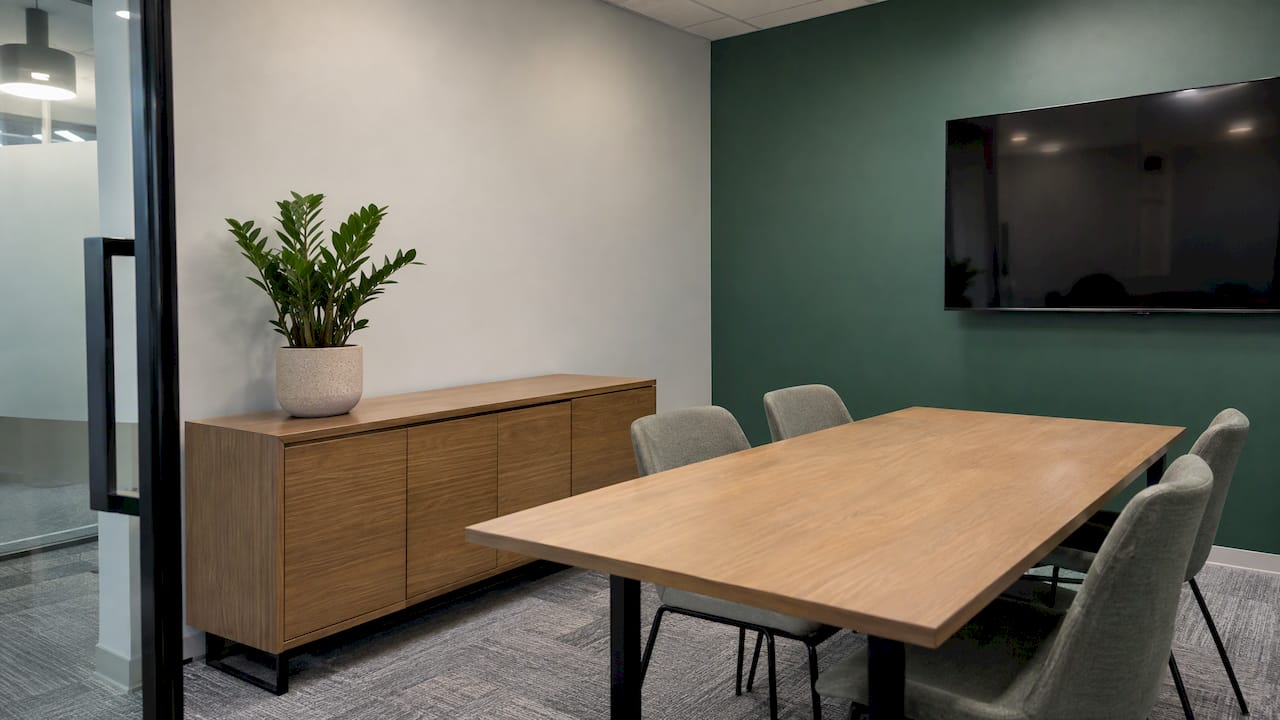
Lounges, kitchens and event areas
This is where members linger and where visitors take photos. It is the place for your most characterful pieces, such as a larger plant in a premium planter, a moss wall or a mix of heights.
If you are outfitting break areas more broadly, there are eco-friendly coworking break-room accessories that sit well alongside greenery.
Care when everyone shares the space
Shared spaces have a care problem. Everyone waters a little. Nobody waters correctly.
The Royal Horticultural Society notes that shared plant care can lead to overwatering or under-feeding. It suggests self-watering containers to prevent overwatering, and regular turning to promote even growth.
Here is a practical routine for shared spaces:
- Name one person or one provider as the plant owner.
- Water to each plant's needs, not on a single schedule for the whole floor.
- Use containers with drainage holes and a tray.
- Let air circulate around leaves.
- Wipe dust from leaves every few months.
- Move any plant you suspect has pests away from the others.
The last four points follow the Manitoba Master Gardener guidance. That guidance also asks managers to consider allergens, toxicity and workplace rules where visitors may touch plants.
If allergies are a concern among members, start with our list of low-allergy office plants. It pairs well with weekly care.
What good plants do for how a space feels
Members choose a coworking space partly on atmosphere. Greenery gives a room life, texture and a sense of care. It also helps with brand: a space that looks cared for suggests an operator who cares.
Some members ask about air quality. Plants are one part of a comfortable environment. Health Canada's guidance on office buildings notes that indoor-air guidance for homes may also apply to offices, since people may spend as much time at work as at home. Good ventilation, clean surfaces and healthy plants all belong in the picture.
What we do for shared workspaces
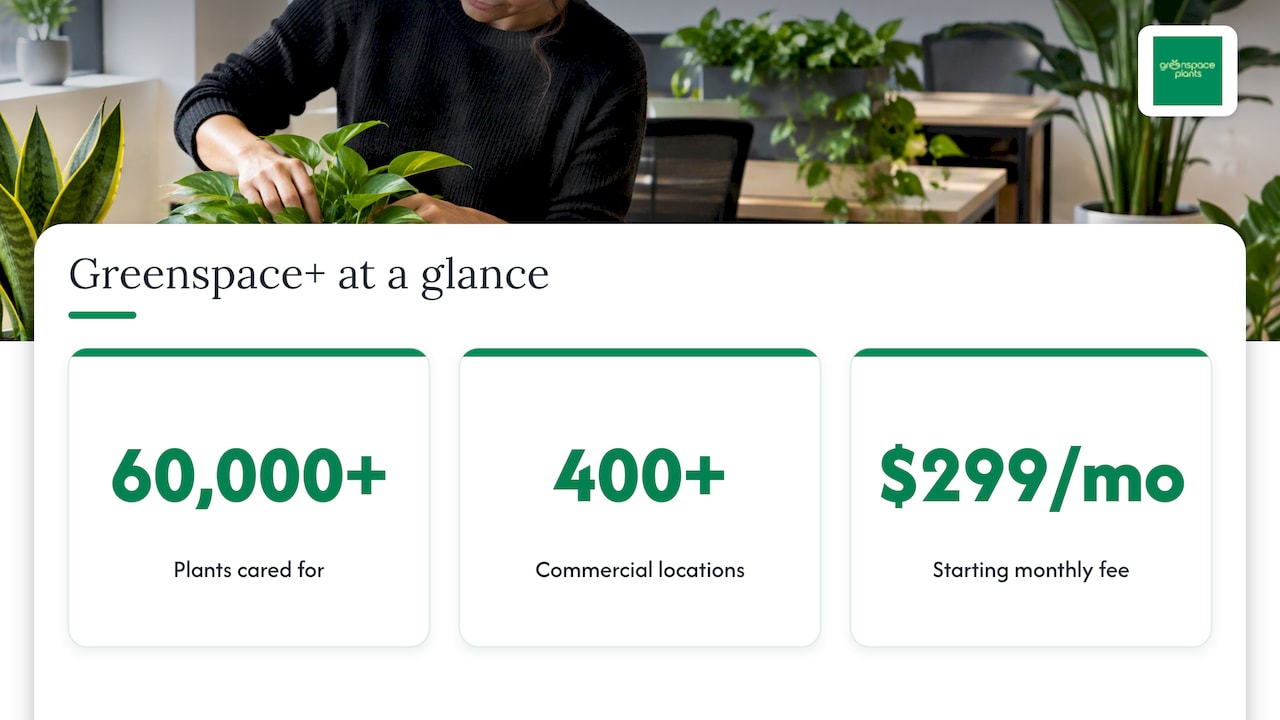
We design, install and care for plants in offices, hotels, restaurants and retail across Toronto, Vancouver and Calgary. We look after 60,000+ plants in 400+ commercial locations. We are WBE Canada certified (woman-owned).
For a coworking operator, Greenspace+ is the simplest route. For a fixed monthly fee, you get plant design, installation, regular maintenance and plant replacements. There are no upfront costs and no long-term commitments. It starts from $299 per month. Our plants come with a healthy plant guarantee.

If you want a one-time install, our Buyout with Plant Care option lets you own the plants and add care. You can compare it with Plant Care Only on our service comparison page. Planning a design first? Start with Indoor Plant Design.
If you run several locations, we run national programs for multi-location brands, including in the US. See the National Account Plant Program.
Our point of view
Most coworking operators tell us the same thing. They want the space to look alive, and they do not want to think about it.
That is fair. A shared space has enough to manage: members, events, bookings, the coffee machine. Plants should be the part that simply works.
We believe plants belong in the design from day one. Pick them for the light, the traffic and the mood of each zone. Then have trained people look after them on a set rhythm, so the room looks the same in March as it did on opening day.
That is why we built Greenspace+ the way we did: design, installation, care and replacements in one monthly fee. Our technicians treat every visit as more than a watering can. They check the whole plant, the planter and the way the space looks.
If your members notice the plants and never notice the upkeep, we have done our job.
Nicole
FAQ
Which plants are best for a coworking space?
Start with your light. Pothos, ZZ plant, snake plant and Chinese evergreen are all listed by the Associated Press for offices with fluorescent lighting. Use trailing forms on shelves and upright forms in corners. We can match the full list to your floor plan.
How many plants does a coworking space need?
There is no fixed number. Plan by zone. Give the entrance one strong feature, add plants between work clusters, and place a few in the lounge and meeting rooms. Leave walkways clear. A design visit gives you a count for your layout.
Can plants work in a room with no windows?
Yes, if you choose carefully. Some plants tolerate low or artificial light, such as lucky bamboo and peace lily, according to University of Vermont Extension. Our guide to low-light office plants covers more.
Who should water the plants in a shared space?
One owner. When many people water, plants tend to get too much or too little. With Greenspace+, our team handles the maintenance, so your staff and members do not need to.
Sources
- Ode to the Office Plant, Manitoba Master Gardener Association
- Choosing and caring for office plants, Royal Horticultural Society
- How to choose and care for office plants, AP News
- Greening Up Office Space, University of Vermont Extension
- Draft guidance on improving indoor air quality in office buildings, Health Canada
- Espaces de coworking et tiers-lieux, Bambooju