
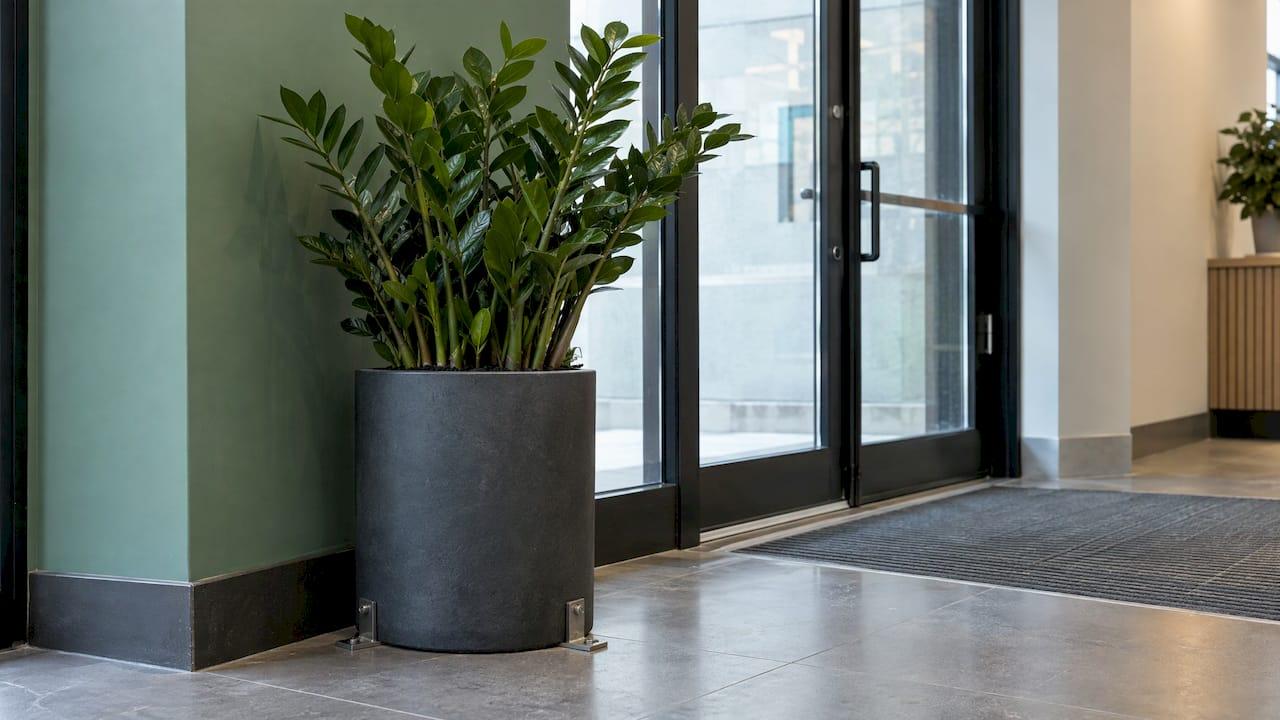
The best defence against patio planter theft is a design that makes planters hard to lift, easy to see and simple to secure. Heavy containers, good lighting, clear sightlines and a nightly routine do most of the work. Add anchoring or monitoring where the pieces are valuable.
We are Greenspace Plants, Canada's leading commercial-only indoor plant service, founded in 2014. We design, install and care for plants in offices, hotels, restaurants and retail across Toronto, Vancouver and Calgary. A patio that keeps its greenery looks better, feels more inviting and says the right things about your brand. Here is how to get there.
Key Takeaways
- Thieves go for easy targets. Large, heavy planters and plants in view are much harder to take than light pots at the edge of the patio.
- Light, visibility and a controlled entry point deter more theft than any single lock.
- Small items come inside at close. Larger ones are chained, bolted or anchored, within your city's patio rules.
- Choose the planter first, then the plant. A well-planned patio gives thieves fewer loose pieces to grab.
- If something is taken, call police, photograph everything and get a case number for your insurer.
Table of Contents
- Why planters get stolen
- Start with the planter, not the plant
- Fixing planters in place
- Light, sightlines and the nightly routine
- Vandal-resistant plants indoors
- Put your patio plan together
- If a planter is stolen or damaged
- Our point of view
- How Greenspace+ keeps your patio looking its best
- FAQ
- Sources
Why planters get stolen
A planter is portable, valuable and often unattended after hours. A restaurant patio, a hotel entrance or a retail frontage all share the same problem. The plants sit outside, and nobody is watching at 2 a.m.
The pattern is easy to spot in the news. In one Winnipeg report, a thief took 13 flower pots from a front yard, and local residents said such thefts were rising. Businesses report the same thing: someone drives up, lifts a plant from the front of the store and leaves.
The lesson is not that you should stop planting. It is that you should plan for the risk the way you plan for sun, wind and foot traffic.
House Beautiful's 2026 look at garden theft makes the same point: the easier a plant is to take, the higher the risk. Large ceramic or concrete planters are far harder to lift quickly than lightweight plastic ones. Low fences, hedges and gates that complicate the exit route also put opportunists off.

Start with the planter, not the plant
Most theft prevention is decided before a single plant goes in. The container sets the weight, the footprint and how it can be fixed in place.
Choose weight and scale on purpose
Secured by Design, a UK police-backed scheme, advises buying the heaviest pots possible for expensive plants. Larger planters also read as intentional design. Three small pots lined up at the door look like an afterthought, and they are easy to carry off. One generous planter looks like part of the architecture.
Our planter size guide walks through how to scale containers to a space. We source standard, premium, luxury and custom planters, so the weight and look can be matched to your brand.
Use weight smartly
Heavy does not have to mean impossible to move at season's end. The City of Ottawa's patio design guidelines suggest filling the bottom half of a container with light inorganic material and setting a soil-and-vegetation insert on top. That keeps planters manageable for your team when needed.
For containers that stay put, a thick layer of rock in the base adds weight, according to a planter-security guide. Locking casters are another option where planters need to move for cleaning or events.

Check your municipal rules first
Before you cement or bolt anything down, read your city's patio rules. Ottawa's guidelines, for example, require that patio vegetation be readily removable from the public right-of-way. Planters must also stay inside the patio footprint and leave the pedestrian clearway clear.
That is one city's rule. Toronto, Vancouver and Calgary each have their own permit conditions, so confirm yours before you fix anything permanently. Locking and chaining methods often meet both goals: secure at night, removable when required.
Fixing planters in place
There is a ladder of options. Pick the rung that matches the value of the piece and your local rules.
| Method | Best for | Notes |
|---|---|---|
| Heavier container | Every patio | Makes quick lifting hard. |
| Rock or ballast in the base | Large planters | Adds weight without extra cost. |
| Chain through drainage hole | Mid-size planters | The RHS suggests a chain through the drainage hole, secured with a shackle. |
| Anchor and stake | Permanent features | The RHS lists land anchors with a permanent stake for chaining or bolting. |
| Locking brackets | Hanging baskets | The same RHS page suggests secure or locking brackets. |
| GPS tag | High-value pieces | Geofence alerts help locate stolen items. |
Concrete anchoring
For planters that never move, concrete anchoring is the strongest option. The planter-security guide describes the steps:
- Dig a square hole an inch or two wider than the planter base and three inches deep.
- Set the container in the hole.
- Pour wet concrete around the base.
- Let it harden overnight.
- Conceal the concrete and add the plants.
Watch the weather. Rain can stop the concrete from setting properly. And again, only do this where your patio permit allows a fixed installation.
Tags and traceability
For expensive statement pieces, FSR magazine recommends GPS security tags with geofence alerts. If a planter leaves the patio, you can find it and alert the authorities. The RHS also notes that electronic tagging helps identify recovered property.
Light, sightlines and the nightly routine
Hardware is only part of it. The rest is how the patio is laid out and run.
Make everything visible
FSR magazine's expert view is that visibility is the heart of asset protection. The more visible outdoor assets are, the better the chance of stopping a theft in progress and recovering what was taken.
In design terms, that means:
- Keep your most valuable planters in clear view of staff, windows and the street.
- Trim landscaping that creates blind spots. Twin City Security recommends removing blind spots and repositioning barriers.
- Use planters as dividers. Sonitrol Western Canada suggests enclosing the patio with fencing, planters or dividers and a controlled entry gate. A planter wall can be beautiful and functional.
The same visibility helps your guests. Plants placed with care frame a view instead of blocking it. Our outdoor dining area plant setup guide shows how to balance greenery, seating and sightlines.
Add light
Darkness helps thieves. Sonitrol Western Canada says motion-sensor lights bring attention to the property and in many cases are enough on their own to scare off thieves and vandals. Warm, well-aimed lighting also makes an evening patio look better. It does double duty.
Close the patio the same way every night
A short end-of-day routine is the most reliable habit you can build:
- Bring small pots, vases and loose decor inside. FSR magazine advises moving al fresco items indoors overnight where possible.
- Secure larger items with padlocks and steel cable, as Sonitrol recommends, or chain them to a secure bolt on the building.
- If you have no room inside, use an outbuilding with a coded lock.
- Switch on the motion lights and check the gate.
- Photograph the patio at close. Dated photos help if you ever need to make a claim.
If your space is tight, off-site storage can help during the off-season. A look at storage facility security shows which features matter when you keep planters and patio furniture elsewhere.
Consider cameras and monitoring
FSR magazine recommends security cameras, including cloud-based systems with app access. Sonitrol Western Canada goes further and says verified 24/7 monitored alarm surveillance is the best way to deter and catch patio theft. Monitoring-station staff verify the alarm and contact the authorities.
A visible camera also helps. House Beautiful notes that visible cameras and video doorbells deter opportunists.
Vandal-resistant plants indoors
The same thinking applies inside lobbies, hotel foyers and retail floors. The NIPA interior plantscaping guidelines say to assess possible damage by children or vandals at the design stage. They add that some plants cope better than others, and that plants should be kept out of areas that are not readily accessible.
In practice:
- Place delicate plants where people can see them but can't easily reach them.
- Choose larger, sturdier planters in public areas.
- Use a green or moss wall in a high-traffic zone, where nothing sits on the floor to be knocked over or carried off.
- Match plant choice to the traffic around it.
Our indoor plant design service plans all of this with your layout in mind, so the plants fit the space and the way people use it.
Put your patio plan together
Here is a simple order of work that suits most commercial patios.
- Walk the patio at night. See what is dark, hidden or easy to reach from the street.
- Choose the planters. Go for large, heavy, well-made pieces that fit your brand.
- Place them for visibility. Keep valuable pieces in line of sight and use planters as borders.
- Fix what should be fixed. Chain, anchor or bolt within your permit.
- Light it. Add motion sensors and warm lighting.
- Set the routine. Decide who brings in what at close, and write it down.
- Plan the care. Healthy plants are less tempting to neglect and easier to keep looking great. Our patio planter maintenance guide covers daily checks and seasonal care.
Fall is a smart time to review all of this. Our fall patio planting guide covers how to keep a patio looking good as the season changes. If you're planning a new patio, our restaurant patio plant installation guide goes step by step.
If a planter is stolen or damaged
Stay calm and follow a clear sequence. AMAROK, a security company, outlines the steps businesses should take after a theft:
- Do not approach a suspected thief. Call the police.
- Preserve the scene. Lock gates and keep people away.
- Photograph the damage, the missing items and any forced entry. Note the exact time you discovered it.
- Give police your inventory list, any security footage and estimated values.
- Get the report or case number and the officer's name.
You will need that case number when you tell your insurer. Call your insurance broker as soon as you can, so you know what your policy covers for outdoor property.
Our point of view
We've spent years watching patios succeed and fail. The ones that thrive are rarely the ones with the most locks. They are the ones where the design did the work.
A big, handsome planter in a well-lit spot is hard to steal and lovely to sit beside. A row of tiny pots at the kerb is neither. So we start with the look and feel of the space, and we build safety into that.
We design, install and care for plants for businesses in Toronto, Vancouver and Calgary. That includes outdoor patios. We look after 60,000+ plants in 400+ commercial locations, so we know that a patio is a living part of your brand. When it looks cared for, guests notice.
Plant care matters here too. A patio that is tended regularly stays full and healthy, and a full patio is a finished picture. That is why we offer maintenance and replacements alongside design and installation.
Nicole
How Greenspace+ keeps your patio looking its best
Patios take a lot of work. You have a business to run, and a planter that is half dead or half gone doesn't help it. That's where we come in.
Greenspace+ is our all-inclusive service. For a fixed monthly fee, Greenspace+ starts from $299 per month and covers plant design, installation, regular maintenance and plant replacements. There are no upfront costs and no long-term commitments. We guarantee healthy plants.

We are Canada's leading commercial-only indoor plant service, and we are WBE Canada certified (woman-owned). For brands with many sites, we run national programs, including in the US. To see how patio plantings can work for your space, visit our patio plantscapes page or talk to our team.
FAQ
How do I stop planters from being stolen?
Use heavy containers and keep them in view. Add motion lighting and bring small pots inside at night. Chain or anchor larger pieces where your local patio rules allow it.
Can I bolt or cement planters to my patio?
Sometimes. Some cities require patio vegetation to be removable, as Ottawa's guidelines do. Check your municipal patio permit before you fix anything permanently. A chain or cable lock is often the safer fit.
Are heavy planters really a deterrent?
Yes. The easier a planter is to lift, the more likely it is to be taken. Large ceramic or concrete pieces are far harder to carry off quickly than lightweight plastic ones.
What should I do right after a theft?
Don't approach anyone. Call the police, photograph the damage and the missing items, and get a case number. Then contact your insurer.
Sources
- Thief steals 13 flower pots from front yard (CBC)
- The Rise of 'Crop-Lifting' (House Beautiful)
- Secured by Design: Secure Your Home Garden
- City of Ottawa: Urban Design Guidelines for Commercial Patios
- How to Secure Outdoor Planters for Stability and Protection
- RHS: Garden Security Tips
- FSR magazine: Securing Your Restaurant's Outdoor Assets
- Twin City Security: Protecting Outdoor Dining Areas From Vandalism
- Sonitrol Western Canada: Protect Your Restaurant Patio From Theft and Vandalism
- Interior Plantscaping Guidelines (NIPA)
- AMAROK: How to File a Police Report for Commercial Theft